






Buffaloes – Our India’s Biggest Export
A famous story from 750 years ago reminds us of true spirituality. A farmer began walking with his buffalo through the town of Paithan. The buffalo would not move and
Buffaloes – Our India’s Biggest Export
A famous story from 750 years ago reminds us of true spirituality. A farmer began walking with his buffalo through the town of Paithan. The buffalo would not move and so the farmer began beating the buffalo calling out his name “Dhyanoba”. Hearing this the people assembled there burst into laughter. At that time four outcaste children were appealing to be recognised as brahmins. The second oldest child had been telling the brahmins that Brahma or the Lord was in everyone so why should he be discriminated against. This boy’s name was also Dhyanoba. This was why seeing the farmer beating his buffalo named Dhyanoba, everyone began laughing. The brahmins asked the outcaste boy what was the difference between him and that dirty buffalo. The boy said there was no difference. Then to the shock of everyone when the farmer was beating the buffalo, the whip marks appeared on the boy’s back.
This unbelievable story says so many things to us today. A saintly boy took the lashes of a beaten buffalo on his back. This is out of his great compassion for the buffalo. and it is why he is still called Mauli (mother) today by devotees. Who has this kind of compassion, this Brahma bhávana (holy ideation) today?
Unfortunately, buffaloes remain among the most abused animals in India. Scriptures sometimes depict the buffalo as a demon, and during festivals like Dashain and Durga Puja, thousands are sacrificed. Yet the deeper tragedy is modern: India is the world’s second-largest exporter of beef — buffalo meat. Killing a cow is illegal, yet killing a buffalo is big business.For thousands of years India has exported wisdom, meditation, beautiful clothes and other products. Why should India now export the flesh of its beautiful buffaloes.
Buffalo milk contains more nutrition than cow’s milk and could help millions of malnourished children — but instead, buffaloes are exploited for labor and slaughter. They are forced to pull loads far beyond their capacity, kept in filthy sheds without water or veterinary care, and subjected to torture to make them obey. Female buffaloes are repeatedly impregnated for milk, while their calves are taken away and often starved or sold for slaughter.
Transport to slaughterhouses is equally brutal. Animals are crammed into overcrowded trucks, beaten, twisted by the tail, poked with sticks, and even force-fed water through their nostrils to simulate drowning. At many slaughterhouses, stunning is not performed, and buffaloes are killed in full view of one another. Some are hammered or skinned alive due to crude killing methods.
This is the price of a growing GDP. India’s prosperity is built on the flesh and bones of gentle animals. Even our sweets are not innocent — 90% of sugar mills use bone char, and India and Pakistan are the world’s largest exporters of it. The bones of buffaloes silently support industries people celebrate.
Our Gurudeva reminds us:
Our PCAP Preceptor, Shrii Prabhat Ranjan Sarkar reminds us with regard to goats, buffaloes and all other slaughtered animals how terrifying is their death:
“Now, put yourself in the same situation. Imagine that you, along with some others, have been captured by a few demons. Then, as you are fed rice and pulse, the demons begin systematically slaughter you all, one after another. The horrified reaction that will arise in your mind as you wait to be butchered is the same reaction as that experienced by the captive goats.”
During COVID, many believed slaughterhouses were a cause of global disease. Whether true or not, the belief exposes our collective guilt — humanity speaks of God and ethics while building massive killing centers.
“Dharma rakśati rakśitah” — those who protect Dharma are protected by Dharma.
If we do not protect innocent animals in this world, then who will protect us in times of crisis and calamity?
Serving the Living Bulls – Devotion in Action
Nandikesha mahábhága shivadhyánaparáyańa;
Gaoriirshaḿkara sevárthaḿ anujiṋáḿ dehi me prabhu.
[O Lord Nandi, the greatest of bulls, who ever remains absorbed in ideational surrender (dhyána) unto Lord Shiva please grant me the permission torender service unto Parvatii’sLord Shiva O my Lord.]
Our founder, Shrii Shrii Anandamurti Ji revealed that Lord Shiva was not mythological but a historical personality who lived around 7,500 years ago. His civilizing influence spread across vast regions — west up to the Alps, east through Tibet and Yunnan to China, and south across India. In the Himalayas He traveled on His yak, also lovingly called Nandi, and during His journey through South India He rode on a bull, also worshipped as Nandi. Since then, devotees have continued to revere Nandi with deep faith.
But while people chant this shloka and offer flowers to the stone idol of Nandi, what is happening to the living bulls made of flesh and blood across our land?
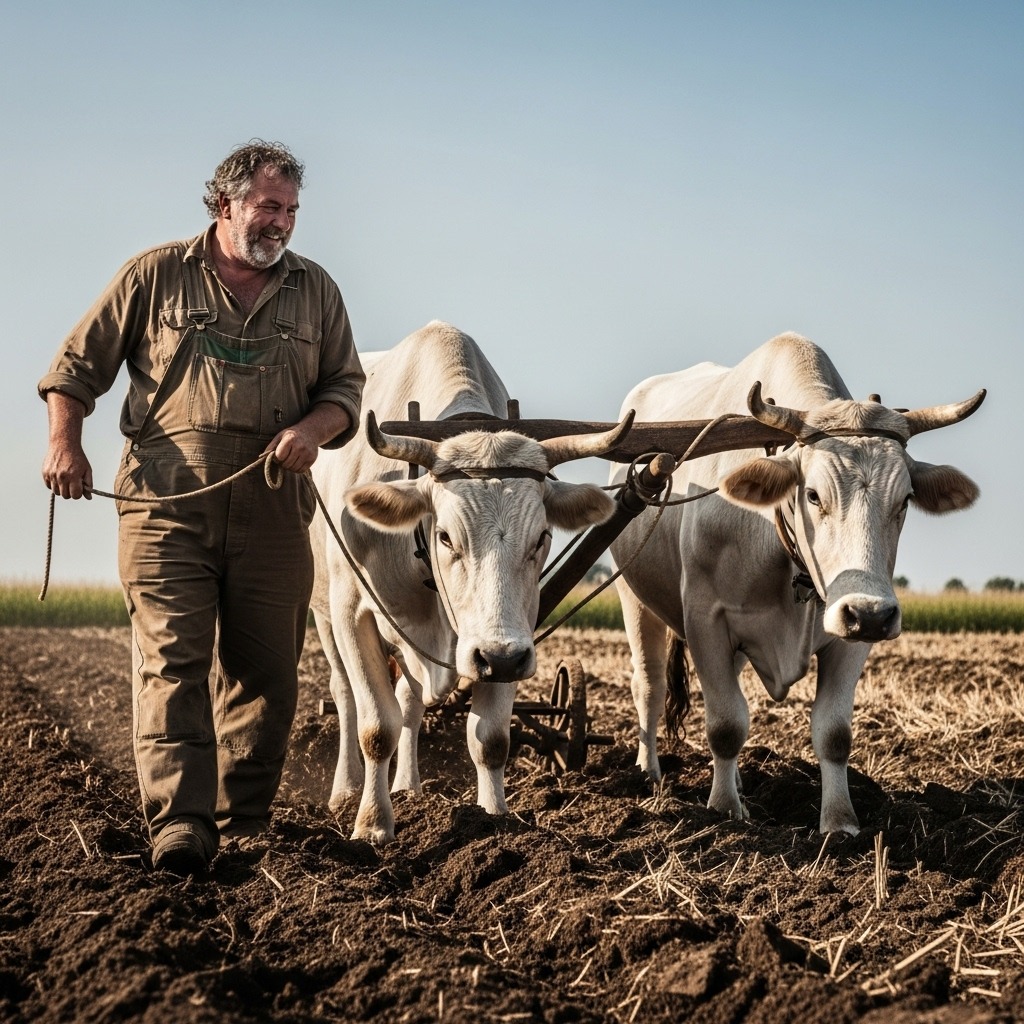
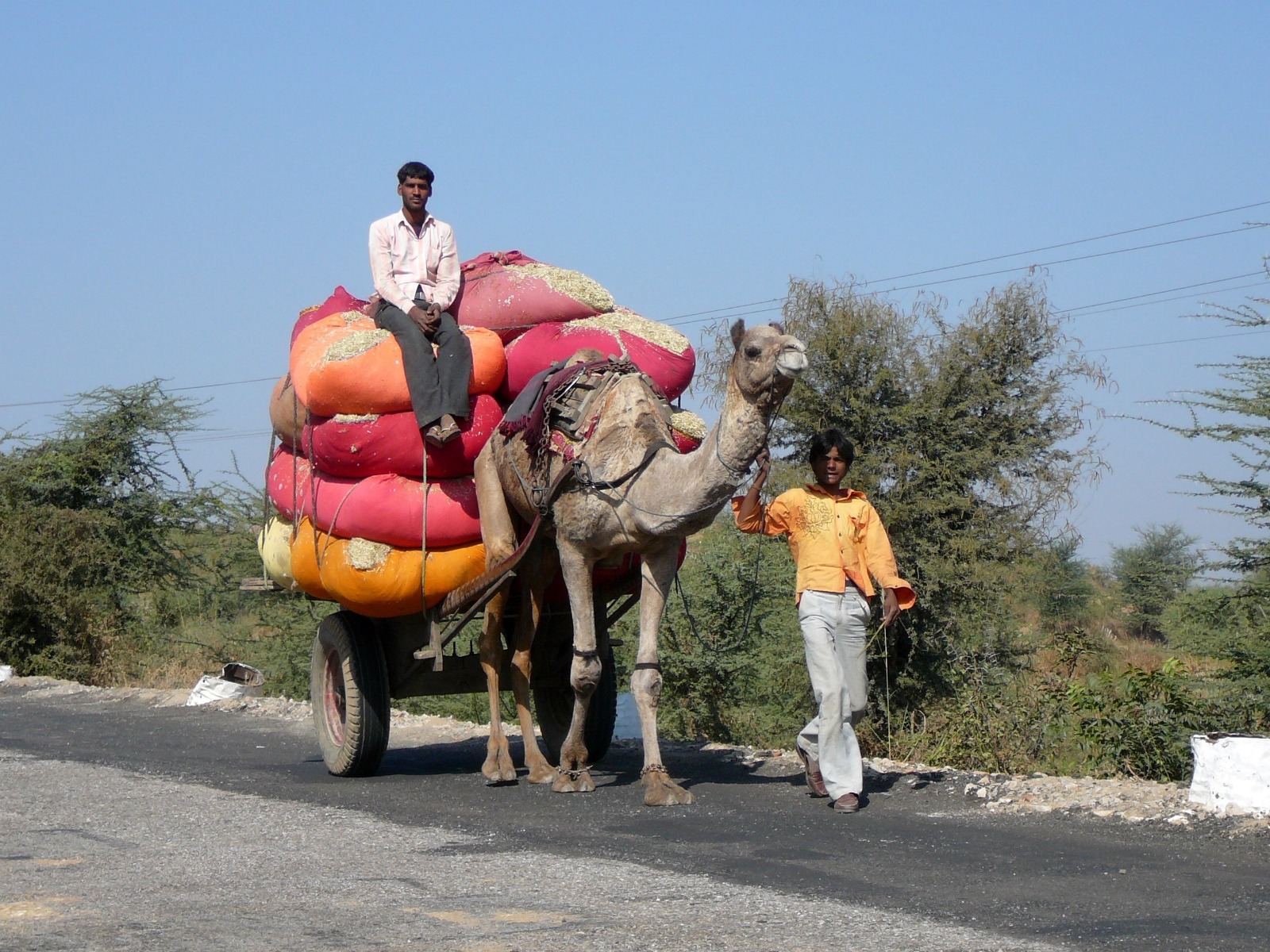
Bulls today are forced into relentless labour — hauling overloaded carts for hours without rest, food, water, or shade. Many suffer from wounds, infections, bruises and muscle injuries. Whips, sticks and nose ropes are used to control them, causing bleeding and severe pain.
In races and festivals, bulls are tortured further — tails twisted, broken, eyes and mouths rubbed with chilli powder or liquor to make them run frenzied with fear. Many are jailed in small stalls kept hungry and thirsty for days, collapsing from exhaustion or dying in chaotic crowds.
Male calves, seen as useless for milk, are neglected or sold for slaughter. Bulls used for breeding purposes may be subjected to cruel methods for semen collection and kept in poor conditions Transport to slaughterhouses is brutal — bulls tied, beaten, overcrowded in trucks in unbearable conditions. Even the sugar industry thrives on their exploitation — bulls pull heavy loads of sugarcane throughout their lives, while bone powder from slaughtered cattle is used to whiten sugar. Humans relish sweets made from the labour, bones, sweat and blood of these faithful animals.
Some abandoned bulls become “strays”, driven out for searching food, only to be beaten or shot. Wild bulls and bison are hunted as forests are destroyed to satisfy corporate greed. The victims are both animals and the poor communities living near forests.
The real crisis is not just cruelty toward bulls — it is an ecological, economic and moral crisis.
If the cow is holy, why is the bull not holy?
Why do male animals have no dignity, no protection, no right to life?
Why do we worship the stone Nandi in temples while exploiting the living Nandi of Lord Shiva outside the temple gate?
It is time for devotees of Lord Shiva to take a stand. Let every village ensure that bulls and bullocks are cared for with the same love given to cows. Let Bhakti become action. Let devotion become a mission for the protection of all beings — animals, plants, and the entire ecological family.
As Gurudeva Shrii Prabhat Ranjan Sarkar has said:
“The humanism which is not motivated by any perennial source of inspiration is bound to become a formality only, devoid of real sincerity. It may die out at any moment, like a river which ends in the sands of the desert. So it must be motivated by a constant and perennial source of inspiration – which I call Neohumanism. When this Neohumanism operates in the external sphere, then internal devotion as a principle is transformed into devotion as a mission.”


Post a comment